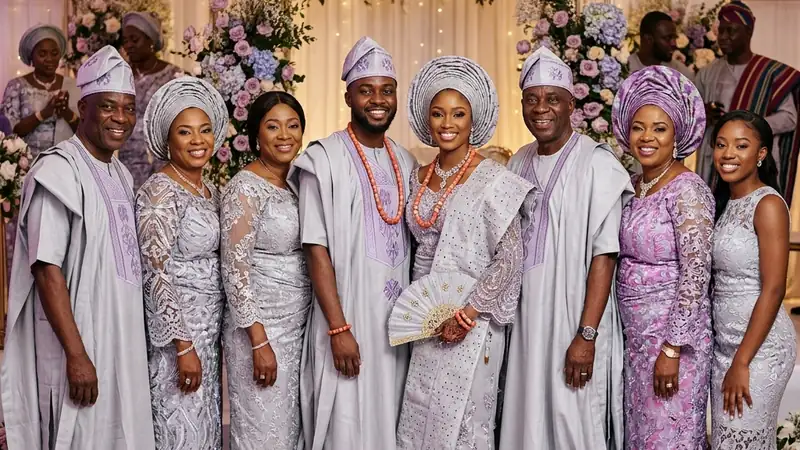
The invitation arrived, and it is unlike any you have received before. It mentions "colours of the day." There may be two ceremonies listed — a traditional one and a white wedding. Someone in the group chat is talking about buying fabric. You are delighted to be invited, and you have absolutely no idea what to put on.
Take a breath. If you have been searching for what to wear to a Nigerian wedding, this guide will answer the question completely — including the parts most articles are too polite to spell out.
First, Work Out Which Wedding You Are Attending
Nigerian weddings often come in two acts. The traditional wedding (sometimes called the traditional engagement) is where the two families formally meet, and it is the more culturally coded of the two: expect Aso-oke, geles, agbadas, and centuries of ceremony performed with joy. The white wedding is the church or civil ceremony followed by a reception — and that reception is, in every way that matters, an owambe.
Your outfit should match the act. At a traditional wedding, traditional attire — yours or Nigerian — is the safest possible choice. At a white wedding, elevated Western formalwear sits comfortably beside kaftans and lace. If you are invited to both, ideally you wear two different outfits. Nobody will arrest you for repeating one, but you will notice that almost no one else did.
Decoding the Invitation: Colours of the Day and Aṣọ Ẹbí
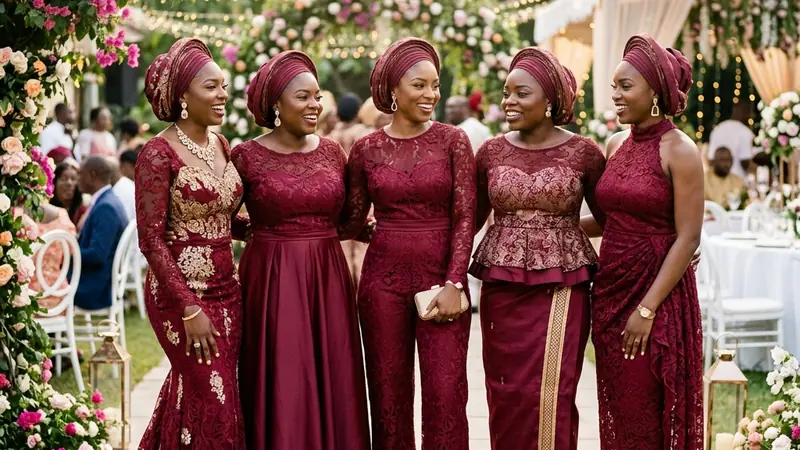
Two phrases on the invitation do most of the work. The colours of the day are the palette the couple has chosen — say, emerald and gold. Working those colours into your outfit is the single easiest way to look like you belong in the photographs, because you will.
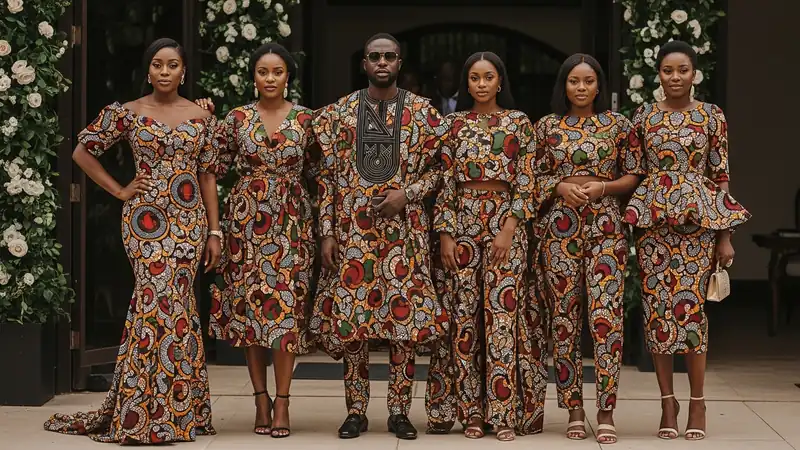
Aṣọ ẹbí is the deeper tradition: a shared fabric worn by the couple's inner circle, each person sewing it into their own style. If you are offered the fabric or invited to buy in, understand what is happening — you are being publicly claimed as family. Say yes if you possibly can. We wrote a complete guide to the aṣọ ẹbí tradition if you want the full story.
If you are not part of the aṣọ ẹbí, the convention is simple: complement the palette, never counterfeit it. Wear colours that sit beautifully next to the chosen fabric without imitating it.
What to Wear to a Nigerian Wedding If You Are Not Nigerian
Here is the question underneath the question, the one guests are often nervous to ask out loud: am I allowed to wear African attire to this wedding?
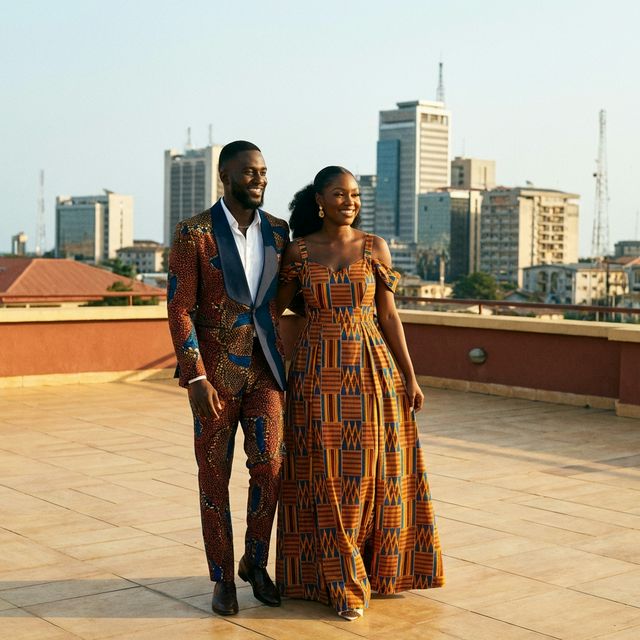
Yes. Emphatically yes. Wearing well-made African clothing to a Nigerian wedding is not appropriation — it is participation, and it is read that way by virtually everyone in the room. Show up in a beautifully tailored Ankara gown or a crisp kaftan and you will spend half the evening receiving compliments from aunties. What matters is intention: clothing made properly and worn with respect, not a costume.
Practically, you have three lanes. First, your own best formalwear in the colours of the day — completely acceptable. Second, a tailored African piece: an Ankara dress, a lace kaftan, a well-cut print suit. Third, the full aṣọ ẹbí, if you were offered it. Any lane works. The only wrong choice is treating the day casually.
For Women: Colour, Structure, and the Gele Question
Think formal, colourful, and structured: a floor-length gown, a well-tailored kaftan, or — if you are feeling brave — an iro and buba in the family's fabric. Rich jewel tones photograph gloriously in a room built for celebration. This is not the venue for beige.
The gele, the sculpted headwrap, is optional for guests outside the aṣọ ẹbí — but if you wear one, you will not regret it. If you are wearing aṣọ ẹbí, a gele is usually part of the assignment: book a gele artist for the morning, or learn the fold yourself with our step-by-step gele guide.
For Men: From a Sharp Suit to an Agbada
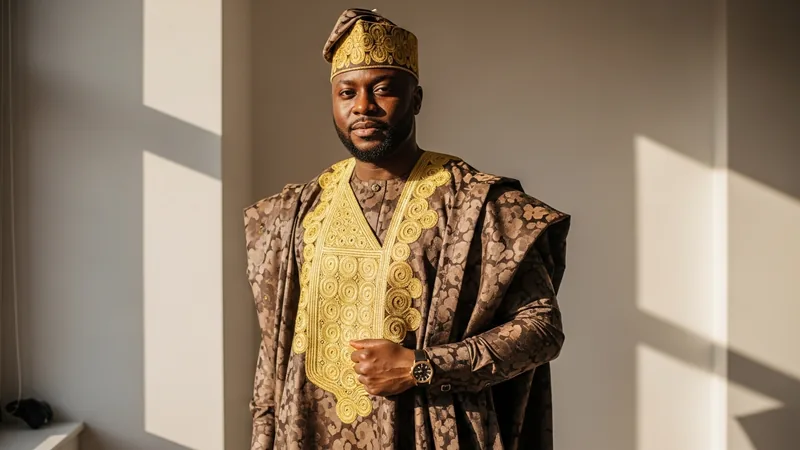
A well-fitted suit in or around the colours of the day is entirely appropriate, especially at the white wedding. But if you want to meet the occasion on its own terms, a kaftan or senator suit is elegant, comfortable, and built for a long night of dancing — and the agbada, the great flowing robe, is the boldest statement a male guest can make. We broke down exactly when to wear each men's style if you are choosing between them.
What Not to Wear to a Nigerian Wedding
The list is short, but every item on it matters:
- White, ivory, or cream — reserved for the couple unless the invitation explicitly says otherwise.
- A lookalike of the aṣọ ẹbí fabric you did not buy into. Complement the colours; do not impersonate the family.
- Head-to-toe black with no colour at all — in many Nigerian families it reads as mourning. Black as an accent is fine.
- Anything casual. Jeans, khakis, sundresses. Underdressing at a Nigerian wedding is not a fashion choice; it is a statement, and not one you want to make.
- Anything you cannot dance in. You will be dancing. This is not negotiable.
Plan for the Day Itself
A Nigerian wedding is long, loud, and gloriously generous. Expect several hours of ceremony, mountains of food — accept the jollof rice; this is also not negotiable — and a dance floor that does not close early. Choose shoes you trust, or bring flats for the second half. When the money spraying begins and guests shower the dancing couple with bills, feel free to join in with small notes, or simply enjoy one of the most jubilant sights in any wedding tradition on earth.
Above all, know this: Nigerian weddings reward effort. No guest has ever regretted being the well-dressed one.
If the wedding is weeks away, start a bespoke consultation and our tailors will build your outfit to your exact measurements — or browse the ready-to-wear collection for pieces made for exactly this occasion. And if you are not the guest but the bride: your whole bridal party can order coordinated custom outfits through one link, and your own outfit could be free.