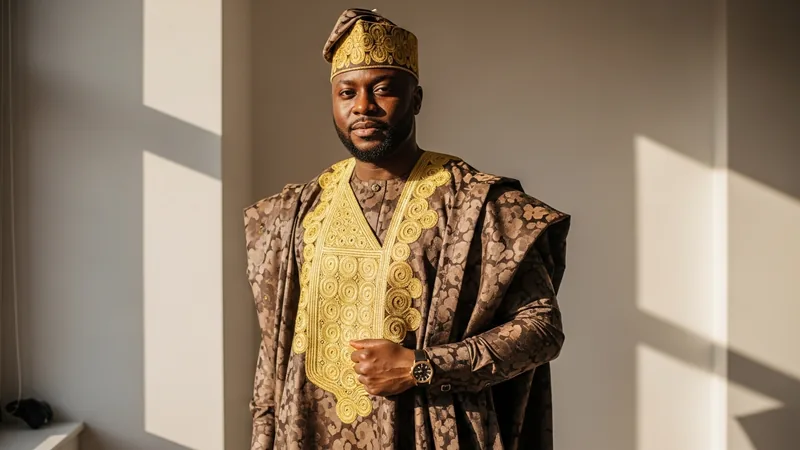
Walk into any owambe, wedding, or end-of-year gathering and you will see it instantly: the men who dressed with intention, and the men who simply showed up. The difference is rarely the price tag. It is the cut, the fabric, and knowing which outfit the moment called for.
Men's African attire is having a moment, but the truth is it never went anywhere. From the boardroom to the dance floor, our traditional menswear carries authority, heritage, and a quiet confidence that no off-the-rack suit can match. The challenge is simply knowing your options — and choosing well.
So let us break it down. Here is your guide to the four pillars of men's African attire, what each one says about you, and when to reach for it.
The Agbada: Command the Room
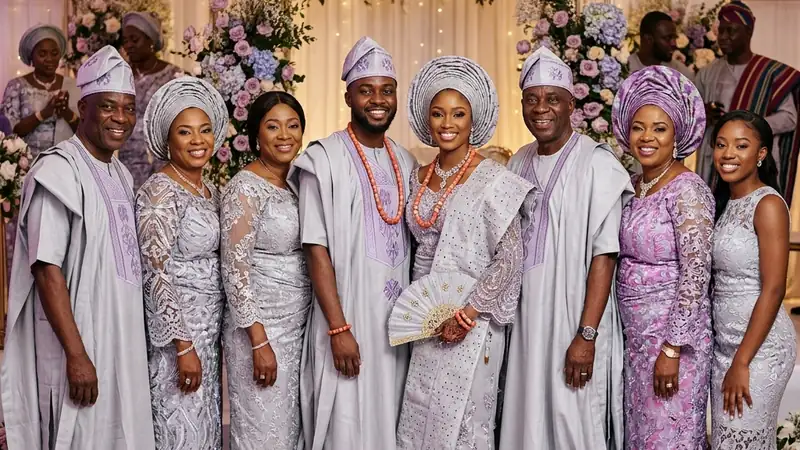
If there is a king of men's African attire, it is the agbada. This is the grand, flowing three-piece — a wide embroidered outer robe worn over a long-sleeved tunic (the buba) and matching trousers (sokoto), usually finished with a fila cap.
The agbada is built to make an entrance. The sweep of the fabric as you move, the embroidery catching the light across the chest and shoulders, the deliberate way you adjust the robe — it all signals presence. This is what you wear when you are the groom, the celebrant, the father of the bride, or simply a man who intends to be remembered.
Modern agbada has evolved. The older styles were enormous and heavy; today's cuts are slimmer, shorter, and sharper, tailored to move with you rather than swallow you. Worn in luxurious lace, brocade, or guipure, a well-made agbada is the most powerful thing in a man's wardrobe — and it is almost always best made bespoke, because the drape lives or dies by the fit of the shoulders.
The Kaftan: Effortless and Understated
Not every occasion calls for the full theater of an agbada. When you want to look refined without the weight — literally and figuratively — the kaftan is your answer.
A kaftan is a long, loose tunic, worn on its own or over trousers, often finished with subtle embroidery around the neckline and chest. It is lighter than an agbada, easier to wear in heat, and endlessly versatile. A richly embroidered kaftan in a deep color reads as elegant and self-assured at a wedding; a simpler one in linen or cotton works for Friday prayers, a dinner, or a relaxed celebration.
The kaftan is the outfit of the man who has nothing to prove. It whispers rather than shouts, and that restraint is its own kind of luxury.
The Senator: African Attire for Every Day
The senator style — sometimes simply called "native" — is the workhorse of the modern African man's wardrobe. It is a two-piece set: a long-sleeved or short-sleeved top with a matching pair of trousers, usually cut close and clean with minimal embroidery, often in plain cotton, wool, or cashmere-blend fabric.
The senator earned its name from Nigeria's political class, and it carries exactly that energy: serious, sharp, and quietly powerful. It bridges the gap between traditional and corporate, which is why you will see it at the office, at meetings, at low-key events, and at church. If you only commission one bespoke African outfit, a well-cut senator in a versatile color will earn its keep more than anything else you own.
Buba & Sokoto: The Foundation
Before the grandeur of the agbada, there was the buba and sokoto — the simple, timeless pairing of a loose top and drawstring trousers that forms the base of much of Yoruba men's dress. On its own, buba and sokoto is comfortable, traditional, and perfect for everyday wear or smaller family gatherings. Layered under an agbada, it becomes the foundation of a full ceremonial look.
Do not underestimate this combination. In the right fabric — a soft Aso-oke, a crisp adire, or a fine cotton — it is understated heritage at its best, and a beautiful entry point if you are building your traditional wardrobe for the first time.
How to Choose — and Why Fit Is Everything
So which do you reach for? A simple rule: match the formality to the moment. Agbada for the headline events where you are meant to stand out. Kaftan for refined occasions where comfort matters. Senator for work, church, and everyday sharpness. Buba and sokoto for relaxed, intimate gatherings.
But here is the part most men miss: the style matters far less than the fit. A cheap agbada that drapes correctly will always beat an expensive one that bunches at the shoulders. African menswear is sculptural — the buba should sit clean across the chest, the sokoto should break just right, and the agbada should flow without drowning you. None of that happens off the rack, especially when you are shopping online and every body is different.
That is exactly where bespoke earns its name. When a master tailor cuts to your measurements, the garment moves with you, and you feel it the moment you put it on. If you are not sure where to start, our guide to ordering a custom African outfit online walks you through the whole process.
Dress Like You Mean It
Men's African attire is not a costume you put on for special occasions. It is a language — of heritage, status, and self-respect — and once you learn to speak it fluently, you will never look at a plain suit the same way again.
Whether you are after a show-stopping agbada for a once-in-a-lifetime celebration or a sharp senator to elevate your everyday, the secret is the same: real fabric, honest craftsmanship, and a fit made for you.
Ready to build a wardrobe that commands respect? Explore our menswear collection or book a bespoke consultation and let our master tailors craft something made entirely for you.