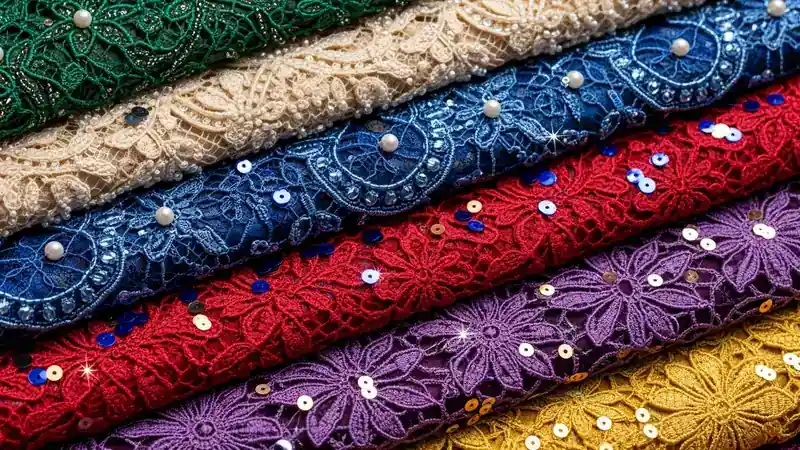
Step into a fabric market in Lagos, Accra, or any African store in London, and the lace section will stop you in your tracks. Walls of it — beaded, corded, sequined, shimmering in every color imaginable, with price tags that range from gentle to genuinely breathtaking. And somewhere in that wall of beauty is the perfect fabric for your next big occasion.
But which one? "Lace" is not one fabric — it is a whole family, and knowing the difference between them is the line between looking expensive and looking like you guessed. While our guide to Ankara, Kente, Aso-oke and Adire covers our indigenous textiles, lace deserves its own conversation, because it has become the undisputed fabric of African celebration.
Let us walk the wall together.
French Lace: The Crown Jewel
If lace has royalty, it is French lace. Soft, fine, and almost weightless, French lace is the fabric you see on the most important guests at the most important weddings — and for good reason.
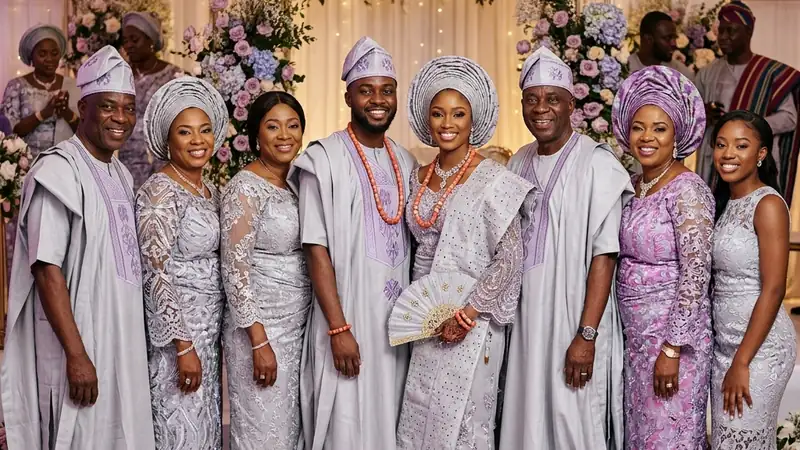
What sets it apart is the detail. Genuine French lace is woven with delicate, intricate floral patterns and finished with sequins, beads, or rhinestones that catch the light with every movement. It drapes beautifully, photographs like a dream, and feels luxurious against the skin. This is the fabric for the mother of the bride, the celebrant, or anyone who wants their outfit to be the one people remember.
It is also the most expensive lace, so it rewards a thoughtful approach: a well-cut French lace blouse paired with a rich wrapper or skirt will always read as more elegant than yards of it worn carelessly.
Cord Lace: Texture and Drama
Where French lace is soft and fluid, cord lace is bold and architectural. Its patterns are built from raised, rope-like cords embroidered onto a sheer base, giving it a striking three-dimensional texture you can feel as much as see.
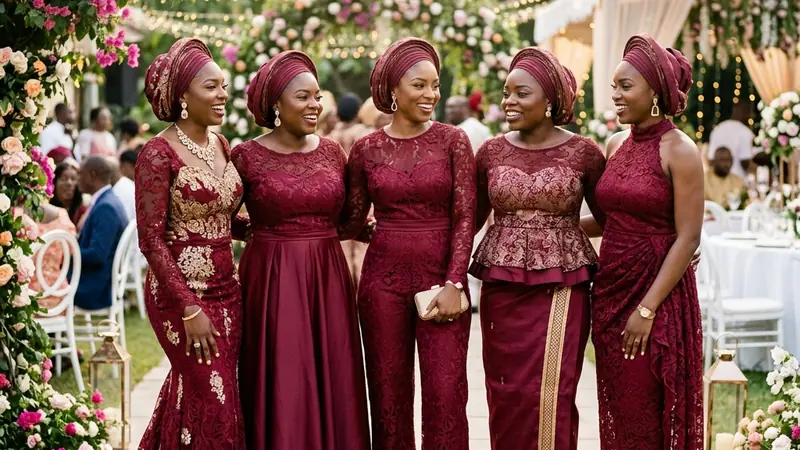
Cord lace makes a statement. It holds its shape, which makes it brilliant for structured styles — peplum tops, fitted gowns, sharp agbada — and it stands out powerfully in photographs. It tends to be more affordable than premium French lace while still looking unmistakably luxurious, which is why it is a favorite for aṣọ ẹbí, where a whole party needs to look coordinated and rich without bankrupting everyone.
If you want presence and drama, cord lace delivers.
Guipure Lace: Bold and Borderless
Guipure — sometimes called "cord guipure" or simply "guipure" — takes things a step further. This is lace with no sheer netting between the patterns. The motifs connect directly to one another, creating a dense, heavy, sculptural fabric that feels substantial in the hand.
Because of that weight and structure, guipure is perfect for tailored, dramatic silhouettes and ceremonial menswear. A guipure agbada or a fitted gown carries serious gravitas. The motifs are often large and geometric, giving the fabric a modern, graphic edge that works beautifully for guests who want to look both traditional and fashion-forward. Guipure says you came to be seen.
Swiss Voile and Everyday Lace
Not every occasion is a wedding, and not every lace needs to weigh a kilogram. Enter Swiss voile — a fine, breathable cotton lace, soft and elegant, with subtle embroidered patterns rather than heavy embellishment.
Swiss voile is the lace of refined everyday dressing: Friday prayers, church, dinners, and the kind of relaxed celebration where you want to look polished without the full ceremonial armour. It is especially loved in men's kaftans and senator styles, where breathability matters and understatement is the point. Lighter on the body and on the wallet, Swiss voile proves that lace does not always have to shout to be beautiful.
How to Choose the Right Lace
So how do you pick from that overwhelming wall? Start with the occasion. For a headline event where you want maximum impact and you have the budget, French lace is unmatched. For a coordinated aṣọ ẹbí group or a structured, dramatic look, cord lace gives you richness and value. For sculptural, statement tailoring, guipure brings the gravitas. And for refined everyday elegance, Swiss voile is your quiet hero.
Then think about the garment. Soft, fluid laces drape best as blouses, wrappers, and flowing gowns; heavier corded and guipure laces shine in fitted, structured pieces that hold their shape. The fabric and the silhouette have to agree with each other — and that is exactly the conversation a good tailor should have with you before a single cut is made.
One last word of caution: lace is one of the most counterfeited fabrics in the world. Real beaded French lace and quality guipure are an investment, and the difference between authentic and imitation shows up fast in how it drapes, photographs, and survives its first wash. Buy from people who know their fabric — and who will be honest with you about what you are paying for.
Wear It Well
Lace is the language of African celebration — of weddings, of milestones, of the moments worth dressing up for. Learn to read it, and you will never again stand frozen in front of that overwhelming, beautiful wall, unsure of what you are looking at.
Choose the right lace for the right moment, pair it with craftsmanship that respects it, and you will not just attend the celebration. You will be part of why people remember it.
Found a lace you love? Browse our collection or book a bespoke consultation and let our master tailors turn that fabric into something unforgettable.